
Benefits of Wisconsin’s Public Library Systems

By Bradley Shipps, Director
Outagamie Waupaca Library System
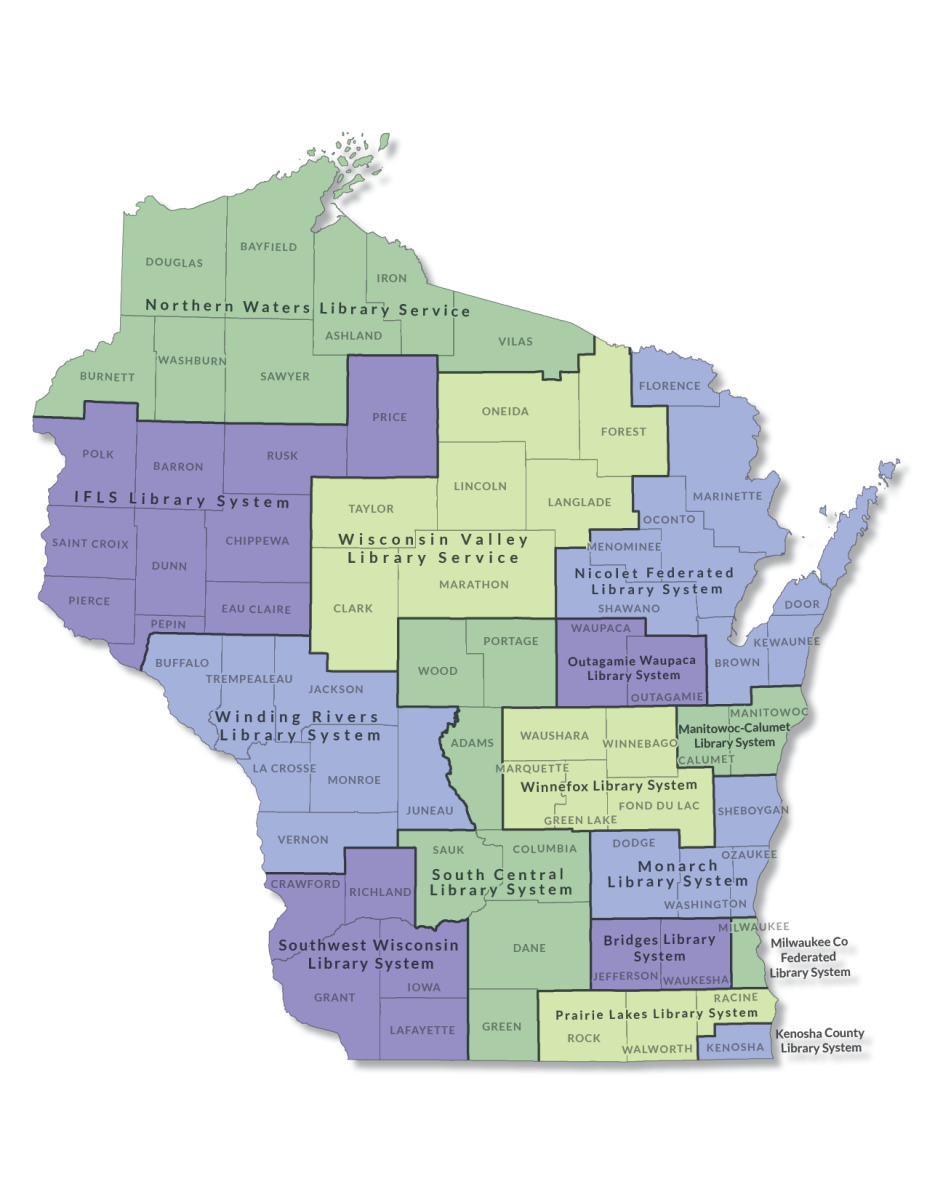
There are 381 public libraries in Wisconsin with 467 local outlets, and every single one of them belongs to one of fifteen regional public library systems. System membership comes with many benefits that strengthen a local library’s ability to serve its community beyond what it can accomplish with local resources alone.
Expanded access and resource sharing
System membership guarantees mutual borrowing and interlibrary loan, allowing patrons to access millions of items statewide rather than being limited to a single local collection. Delivery networks and coordinated interlibrary loan services make this sharing efficient and reliable.
Systems assist with regional planning, service agreements, and coordination with neighboring systems and other types of libraries (academic, school, and special libraries). As a result of efficient statewide coordination, Wisconsin ranks highly in the nation for library resource sharing.
Cost savings and economies of scale
Systems provide shared infrastructure—such as online catalogs, delivery services, and technology platforms—that would be too expensive for individual libraries to operate alone. By avoiding duplication of services, communities save money while receiving higher-quality service.
Improved service quality
System-funded services enhance local operations through access to backup reference services, professional consultation, and promoting and facilitating inclusive services for underserved populations. Additionally, systems promote cooperation rather than competition among libraries, improving service consistency across municipalities of different sizes and types.
Technology and innovation
Systems support technology planning, shared catalogs, IT infrastructure, and cybersecurity, helping libraries adopt new technologies safely and affordably.
Support for local library boards of trustees
Regional systems also directly support library boards in carrying out their governance and oversight responsibilities.
- Systems provide training for trustees, helping boards understand their statutory roles, governance responsibilities, and emerging issues in the library field. Ongoing education strengthens trustee decision-making and leadership
- System staff offer expert advice on policy development, planning, budgeting, technology, hiring, and service models, giving boards access to specialized knowledge they may not have locally.
- Because systems receive and manage state funding, they help ensure compliance with statutory requirements and standards of service, supporting boards in meeting legal obligations.
- Systems play a leadership role in statewide advocacy for libraries, indirectly benefiting local boards and communities. Systems play a supporting role in local advocacy efforts, providing data and communications support.
In short, membership in a regional public library system allows a Wisconsin public library to offer broader access, better services, and greater efficiency than it could alone. For library boards of trustees, systems provide training, expert guidance, and accountability frameworks that strengthen governance and help ensure equitable, high-quality library service for all residents of the state.
References
This article was drafted with the assistance of ChatGPT to pull relevant information from the following sources. The final article was edited for readability and reviewed for accuracy by system staff.
- Trustee Essentials, Chapter 17: Membership in the Library System
- Trustee Essentials, Chapter 26:The Public Library System Board—the Broad Viewpoint
- WLA Library Legislative Day handout “Wisconsin’s Public Library Systems”